AI-teh seminars
AI-teh seminars
For this monthly seminar series, we invite colleagues from the Humanities and Social Sciences to present how they have leveraged artificial intelligence in their own research methodology. The seminars are practically oriented demonstrations of instances of implementing AI at any stage of research, including data preparation, annotation, analysis or anything else. The seminars should serve as a platform not only to showcase uses of AI and get feedback on this, but also for participants to get inspiration for their own research and potentially as an opportunity to further collaboration.
The seminar series takes place on selected Mondays every month at 16:00-17:30 in Tartu and via Zoom. Please register your participation here. Additional information and a Zoom link will be sent before each seminar. All seminars are in English and are followed by a discussion.

Upcoming seminars:
September 7, 2026
16:00-17:30, Zoom
Nina Tahmasebi, Professor of Computational Linguistics (University of Gothenburg)
“Computational modeling of semantic change and its applications”
In this talk, I will start by introducing the pipeline for computational modeling of semantic change (SC) and the state-of-the-art in terms of modeling and evaluation. I will describe some of the recent developments made within the Change is Key! Program including definition generation, Janus for the generation of historical sense-annotated data, and the modeling (and manually annotated data) of different types of semantic change. I will describe the humanities and social science focus projects within CIK! in which we apply computational modeling to e.g., study pluralia tantums and laws of synonomy.
October 5, 2026
16:00-17:30, Jakobi 2-114 (Tartu) & Zoom
Krister Kruusmaa, AI Alignment Lead (Institute of the Estonian Language) & Visiting Lecturer in AI and Digital Humanities (Tallinn University)
“Aligned to Whom? Evaluating AI Across Languages and Cultures”
Large language models are increasingly both the instruments and the objects of humanities research, yet they behave differently in every language and culture. This talk is about the values, attitudes and cultural knowledge models carry, as well as the practice of measuring this. Drawing on Estonia’s public LLM leaderboard, I will discuss how cultural traits of AI feed back into our information space and what that means for anyone who studies or relies on these tools.
November 16, 2026
16:00-17:30, Ülikooli 18-139 (Tartu) & Zoom
Kaarel Sikk, Research Fellow in Archaeology (UT Institute of History and Archaeology) & Research Fellow in Complex Systems (UT Institute of Genomics)
“AI Workflows in Humanities: Systematic Literature Review”
December 7, 2026
16:00-17:30, Jakobi 2-114 (Tartu) & Zoom
Alan Voodla, Research Fellow (UT Institute of Psychology)
“From LLM-conversations to Personal Behavioral Insights”
Past seminars
May 11, 16:00-17:30 EEST. AI-teh #1: Maciej Eder, Visiting Professor of Digital Humanities (UT Institute of Estonian and General Linguistics)
Digital Humanities and AI: A Showcase
Jakobi 2-438 & Zoom. Slides available here.
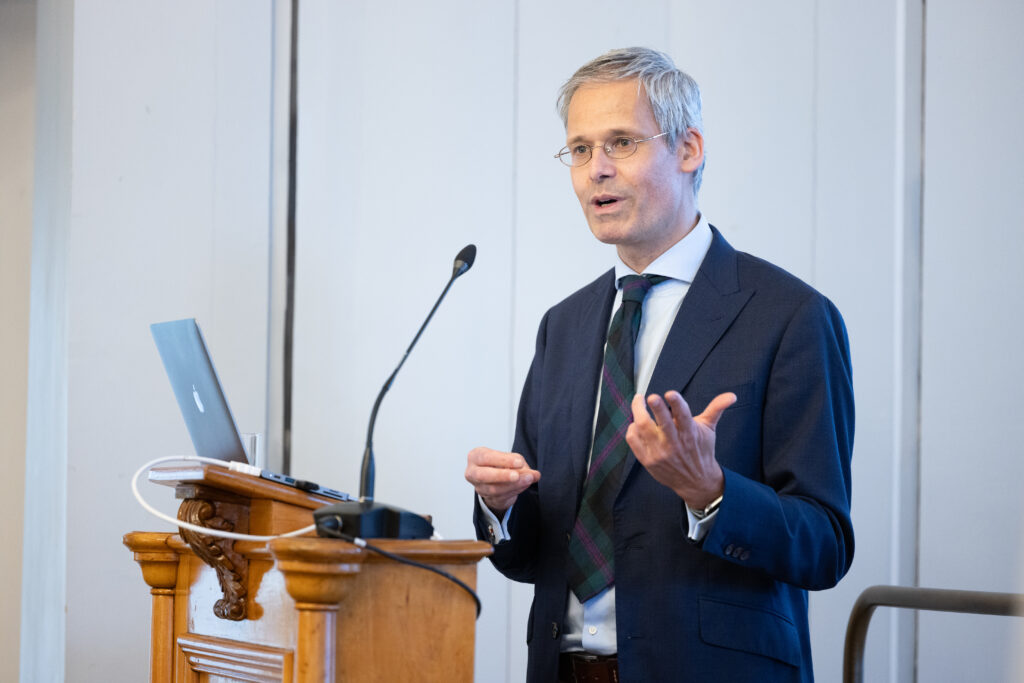
The AI world is developing so fast that any topic that seems relevant today, might be outdated tomorrow. With this in mind, the presentation will focus on two actual case studies that used early-stage Transformer-based models, approached by trial and error. The first case is a project of translating (any) written text into sign language gestures (also known as glosses) that can then be animated using avatar technology. An example of translating written Polish into the Polish Sign Language will be presented, for it exhibits an extreme training data scarcity challenge. The second case study is a relatively large (+250k bibliographic entries) yet entirely unstructured database of all the prints published in Poland in 16th-19th centuries (in many different languages). By instructing a language model how to retrieve relevant data about the publication year and the publication place from thousands of unstructured title pages, we are able to reconstruct the history of the printing centres from a bird’s eye view. Some challenges of making the model understand historical variants of several languages, will be presented.
Photo: Andres Tennus
June 8, 16:00-17:30 EEST. AI-teh #2: Andres Karjus, Associate Professor of Computational Social Science (UT Institute of Social Studies)
AI in Research: from Annotators to Assistants and Agents
Ülikooli 18-139 & Zoom. Materials: slides, research paper generated during the meeting. The event was also recorded and can be watched on YouTube.
The seminar series is organised by DigiTS. DigiTS is a project funded by the European Union under grant agreement ID 101186601.